Some questions contain hidden assumptions or fallacies that render them nonsense, impossible to answer meaningfully. What color is yesterday? makes a category mistake; so too When is a square? What meaning would any answer offer?
My region of the country – the south and southeast – recently has experienced devastating storms, costly in property and, most tragically, in lives as well. In this we are not alone; the Midwest has suffered and is suffering still. More than once in the aftermath of these storms I have heard the age-old question, Why do bad things happen to good people? More lament than query, likely no answer is required, just prayer and compassion and assistance. That is just as well. The question as posed allows for no meaningful answer. Hidden assumptions and fallacies lie in wait for the unwary.
First, there is the notion of “good people.” This is a Romantic idea and perhaps an Enlightenment one. But, it is not a biblical notion. When hailed as “Good Teacher” by an apparently honest seeker, Jesus replied, “Why do you call me good? No one is good but God alone” (Mk 10:18, NRSV). Following this line of assessment, Paul writes:
‘There is no one who is righteous, not even one;
there is no one who has understanding,
there is no one who seeks God.
All have turned aside, together they have become worthless;
there is no one who shows kindness,
there is not even one.’
‘Their throats are opened graves;
they use their tongues to deceive.’
‘The venom of vipers is under their lips.’
‘Their mouths are full of cursing and bitterness.’
‘Their feet are swift to shed blood;
ruin and misery are in their paths,
and the way of peace they have not known.’
There is no fear of God before their eyes’ (Rom 3:10-18, NRSV).
The Christian faith is not unduly pessimistic, just unflinchingly realistic about human nature. G. K. Chesterton once remarked – tongue-in-cheek but quite accurately nonetheless – that original sin is the only truly demonstrable Christian doctrine. Christians – at least those who look honestly into Scripture and into their own hearts – understand “good people” as a category mistake not unlike a blue yesterday or a 5 o’clock square. There simply is no category of people – even the best of the lot – that may be called good and thus may be granted immunity from the difficulties and tragedies of life. Those Christians well grounded in the ancient faith are much more likely to ask why good things happen to bad people rather than the other way round.
Second, there is the notion of “bad things.” It takes a bit more work to see this also as a category mistake, but I think it is worth the effort.
Things – by which we generally mean actions or events – certainly may be evil. Christians consider anything that opposes the will of God to be evil. Nor does one need be a Christian to recognize evil, though the lack of absolute referent may be problematic. Christian or not, humans consider such atrocities as the Holocaust evil; to refuse to apply the word “evil” to such things is to bring one’s own humanity into question. There is, then, clearly a category of things labeled evil, a category usually reserved for the actions of men. And it is legitimate to question why evil things happen – not to good people but to any people at all. The Christian story offers an answer, though one I am afraid is much out of favor presently: sin. Evil is the product of human choice – free choice, yes, but free choice which has been conditioned by all the errant choices of humanity that have shaped a world in which evil is most often the easiest of choices to make. An addict is free to refuse the next drink or pill, but his freedom is conditioned by all the previous choices to feed his addiction and by the culture of addiction in which he almost certainly lives. This is not to reduce personal responsibility, but to place it within a context of corporate responsibility, as well. We are individuals, but also corporate members of humanity and our choices matter not only to ourselves, but to all men.
In a separate category, things may be tragic. These are impersonal events which violate a sense of proper order, a sense of how things “ought” to be: the untimely death of a child or young adult; the devastation wrought by tsunami, tornados, floods – “natural” disasters; the hardships wrought by drought and famine, and the like. Unlike evil things, there apparently is no one to blame for tragic events – unless one seriously considers them “acts of God.” Such events are nondiscriminatory and random – they just happen – making no distinction between saint and sinner or prince and pauper. Yet again, the Christian story offers the same explanation for tragic events as for evil ones: sin. Human sin has disrupted the order of creation and has introduced entropy and corruption where once there was order and incorruption (cf Rom 8). Clearly human behavior impacts nature: oil spills, greenhouse emissions, deforestation, etc. The Christian story sees these specific examples as signs of a disease that infects man at a much more fundamental level. The world is out of sorts because man has failed to fulfill his vocation as steward of God’s creation. Creation suffers at our hands, and we, in turn, suffer at creation’s hands.
We could add other categories. Painful things come to mind – loss and hurt common to all men – like the dissolution of a marriage, the death of an aged parent, the financial collapse of a family business: things not unusual or unexpected, but hurtful nonetheless. But no matter how many categories we add, one will be missing: bad things. For by “bad things” I mean irredeemable events that separate one from the love and will of God; and these simply do not exist.
As one case in point Scripture offers the story of Joseph: sold into slavery by his brothers, falsely accused of attempted rape, wrongly imprisoned, and forgotten. And yet, when time came that Joseph could exact revenge on the very brothers who instigated these evil events he said instead:
“Do not be afraid! Am I in the place of God? Even though you intended to do harm to me, God intended it for good, in order to preserve a numerous people, as he is doing today” (Gen 50:19-20, NRSV).
This text does not deny that Joseph’s brothers intended evil. Nor does the entire story deny that evil resulted from their actions; slavery and false imprisonment are clearly evil acts. But the story will not allow any of these things to be called bad precisely because God redeemed them and used them not only for Joseph’s salvation, but for the salvation of many – and ultimately for the salvation of all through the preservation of Israel.
The story of Joseph is but one of many examples offered in Scripture. Paul draws all the specific examples together in a grand theological picture of the good things in the providence of God:
We know that all things work together for good for those who love God, who are called according to his purpose (Rom 8:28, NRSV).
Who will separate us from the love of Christ? Will hardship, or distress, or persecution, or famine, or nakedness, or peril or sword? No, in all these things we are more than conquerors through him who loved us. For I am convinced that neither death, nor life, nor angels, nor rulers, nor things present, nor things to come, nor powers, nor height, nor depth, nor anything else in all creation, will be able to separate us from the love of God in Christ Jesus our Lord (Rom 8:35, 37-39, NRSV).
Evil things? Yes. Tragic things? Certainly. But bad things – things which are irredeemable by God, things which cannot be incorporated into his will for the salvation of man and the restoration of the cosmos? No. So, the Christian has no answer for the question of why bad things happen to good people because he knows it to be a meaningless question. Instead, the Christian would prefer to tell the story of a God who is even now through Christ putting all things to rights, who is even now drawing good from evil and tragic events alike. The Christian prefers to tell the final chapter of the story in which heaven and earth are joined, God’s will is done on earth as in heaven, and God is all in all – the final chapter:
God himself will be with them;
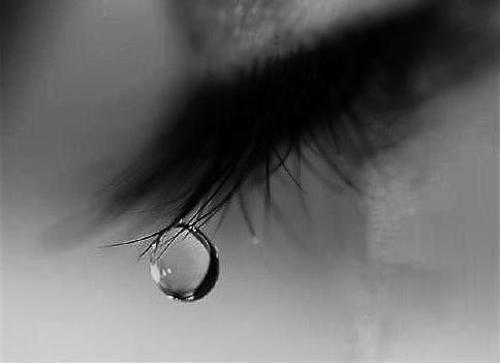
he will wipe every tear from their eyes.
Death will be no more;
mourning and crying and pain will be no more,
for the first things have passed away (Rev 21:3b-4, NRSV).
This is more than semantics and sophistry; it is the Christian faith and hope that praise God as sovereign over his creation, that recognizes that our God is good and never stands helpless before his creation. It is the faith and hope that allow us to enter into the pain of the world in redemptive prayer and work, knowing that our God draws straight with crooked lines. He is, after all, the one who brought life for all from the death of his son – the greatest good from the worst evil. In light of the cross, there are no bad things – only things which God can and will use for good, for the life of the world.
Additional Thoughts:The foregoing still represents my best attempt at a theological answer to theodicy. I still believe it to be true, but, when the evil days come, I am not convinced that it will be real.
When evil comes to us, I suspect we all want the same thing – the one thing we cannot have: we want the evil “undone” and everything made right again. But, the reality is otherwise. The hateful word spoken cannot be retracted regardless of the multitude of “I’m sorry”s and “I didn’t mean it”s. One act of infidelity shatters the trust so painstakingly fashioned from thousands of moments of faithfulness and cannot be turned to fidelity. The mistake made cannot be unmade, though perhaps the consequences may be mitigated. The true diagnosis once given is never retracted.
Time has an arrow and it points resolutely forward. And though we believe in being born anew, the “old things” never pass away as completely as we wish. In his resurrected body – surely the best example of being born anew – Jesus retained the scars of his evil days. And we retain ours.
So, we are left aching for total renewal: for a true “do over,” for all things to be made new and right, for evil to be not only defeated but destroyed. And that is precisely what we cannot have. Not here. Not now. Not by our own power.
All we really have in the face of such evil is hope that the One who has promised to make all things new can and will, in the last great day, do so. All we really have is the hope that, as Andrew Peterson sings in After The Last Tear Falls:
And in the end, the end is
Oceans and oceans
Of love and love again
We'll see how the tears that have fallen
Were caught in the palms
Of the Giver of love and the Lover of all
And we'll look back on these tears as old tales.
All we really have is trust that God is, that he loves us in ways and to depths that we cannot understand, that nothing can separate us from his love, and that ultimately his love will resemble that which we do understand: a love that dries and then banishes tears with laughter, a love that comforts and then replaces sorrow with joy, a love that conquers and then finally destroys death.
Why is it not this way now? Why the evil days? I have no answer. I cannot find a clear and direct answer in Scripture. Things are not as we wish they were; that is the reality that keeps me praying, “Even so, come, Lord Jesus.”
I am convinced that it is useless – and perhaps even harmful – to grapple with theodicy in the midst of evil days. Some things must be decided beforehand. If I have not – through prayer and worship and reflection and experience – determined that God is good and trustworthy before the evil days come, it is almost certain that I will not reach those conclusions in the depths of them, while desperate and suffering. And this may be the only real answer to theodicy after all, though it is likely helpful to none but oneself: I know God. I have experienced his love for me and his faithfulness to me. And while the evil days may shatter my theology and, for a moment, challenge my love for God, they cannot shatter the Truth or defeat God’s love for me.

No comments:
Post a Comment